November 9, 2026 · 6 min
Decider 1.1: it reads images and knows when it does not know, at the same price
Decider 1.1 is out today, and it is now the model behind every Decider request. If you already call decider-1, you are on 1.1 from today and there is nothing to change. If you would rather name the version, call decider-1.1. The price has not moved: $0.04 per million input tokens, and output is still free.
What changed is everything underneath. Decider 1 was good at one thing, answering typed questions about text. Decider 1.1 reads images, reads eight times as much text in one request, picks from up to 255 options instead of ten, and has learned to tell you when it does not know.
What is new
- Images. Put a screenshot, a receipt, a chart or a photo in the state and ask about it, with the same three question types as before.
- Longer requests. Up to 32k tokens per request, up from 4,096. Long tickets, whole agent traces and multi-page documents now fit.
- More options. A
choicecan offer up to 255 labels. Routing over a full intent list like BANKING77 or CLINC150 is one question now. - Each question is answered on its own. In Decider 1, adding a question could nudge the answers to the others. Now every question reads the state by itself, so a threshold you tune stays put when you ask something else alongside it.
- “I don’t know” when it doesn’t. Offer an I don’t know option and 1.1 will take it when the state does not support an answer, instead of guessing confidently. More on that below.
How much better than Decider 1
We ran 1.1 on the same evals we used to find Decider 1’s weak spots. The biggest change is tool calls. Given a request and a list of tools, Decider 1 picked “call a tool” almost every time, even when no tool fit or the user had left out an argument. On NVIDIA’s When2Call it scored 42. Decider 1.1 scores 77.9. Safety moved nearly as far: on Ai2’s WildGuardTest, spotting a harmful response went from 54.3 to 87.6.
Where it is ahead of Jev
TypeSafe’s Jev is the model most people compare us with, so we ran Jev 1.14 through its own API on the same items. To be straight about it: Jev is a larger model and it is still ahead on general knowledge and reasoning. These are the evals where Decider 1.1 comes out in front.
Two more that do not fit on that scale:
- Calibration. On the typed-decisions benchmark, Decider 1.1’s answers sit 0.116 from the reference distribution (KL divergence). Jev 1.14’s sit at 1.471. When Decider says 80%, it is right about 80% of the time, so you can set a threshold on it.
- Speed. Median latency under our eval load was 170 ms for Decider 1.1 against 428 ms for Jev.
Decisions about images
Images go in the state like any other value, and you ask typed questions about them. We drew three images ourselves and asked Decider 1.1 the questions below. These are its actual answers, not edited.
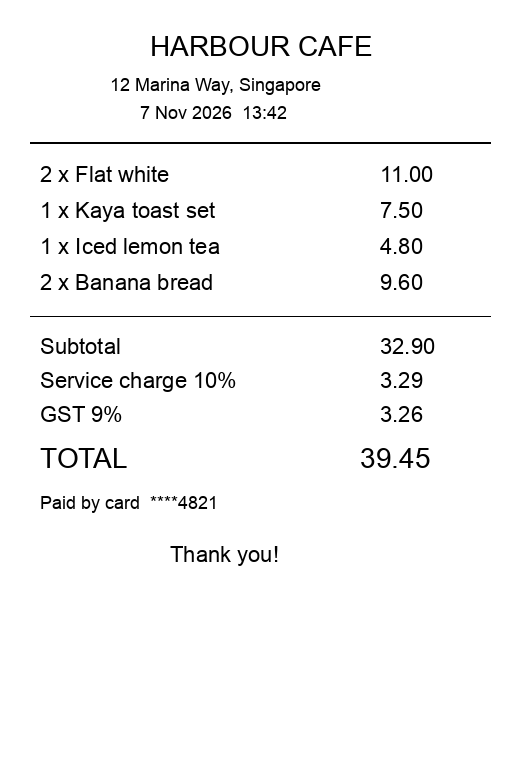
| Question | Type | Decider 1.1 answered |
|---|---|---|
| What is the total amount paid? | choice | 39.45 (100%) |
| Does this receipt include a service charge? | noul | yes, 98% |
| Was this bill paid in cash? | noul | no, 100% |
| Which expense category fits? | choice | Food and drink (100%) |
Expense tools are the obvious use: read the total, check the category, flag a receipt that does not match the claim, without sending it to a large model first.
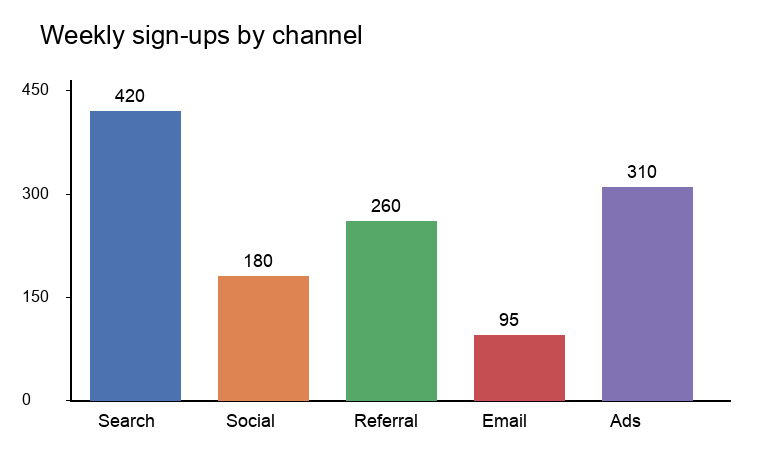
| Question | Type | Decider 1.1 answered |
|---|---|---|
| Which channel brought the most sign-ups? | choice | Search (95%) |
| Which channel brought the fewest? | choice | Email (100%) |
| Did ads bring more sign-ups than referrals? | noul | yes, 75% |
Notice the last one. Comparing two bars of similar height is harder, and the model says so with a lower probability rather than a confident yes. That is the behaviour you want if you are going to act on the number.
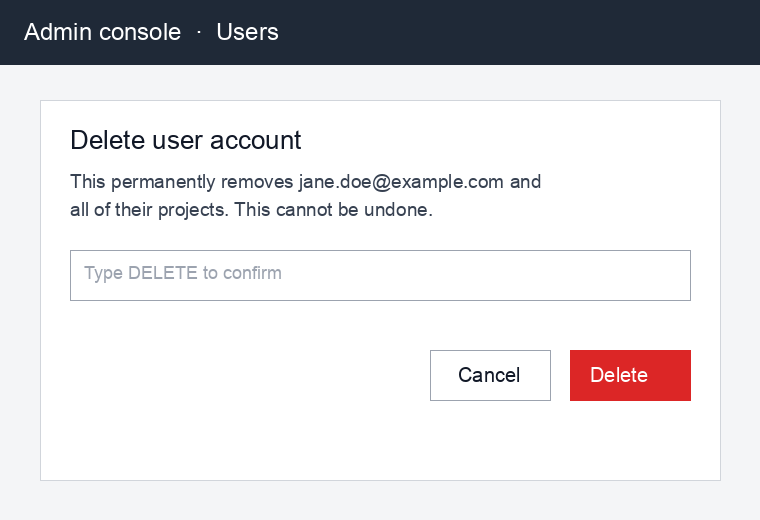
| Question | Type | Decider 1.1 answered |
|---|---|---|
| Is the user about to take an action that cannot be undone? | noul | yes, 100% |
| What is this screen asking the user to do? | choice | Confirm a destructive action (100%) |
| How risky is clicking the red button? (none to high) | score | 2.1 of 3 |
For agents that drive a browser or a desktop, this is the check before the click: is this screen about to do something that cannot be taken back?
The request is the same shape as a text request, with the image as a data URL:
curl https://meragpt.com/v1/systemone \
  -H "Authorization: Bearer $MERAGPT_API_KEY" \
  -H "Content-Type: application/json" \
  -d '{
    "model": "decider-1.1",
    "state": {
      "receipt": {"type": "image_url", "image_url": {"url": "data:image/png;base64,iVBORw0KGgo..."}}
    },
    "questions": {
      "total": {"type": "choice", "instructions": "What is the total amount paid?",
                "criteria": {"39.45": "39.45", "32.90": "32.90", "36.19": "36.19"}},
      "service_charge": {"type": "noul", "instructions": "Does this receipt include a service charge?"}
    }
  }'
If you use TypeSafe’s SDK, nothing changes. Images you pass as Image objects reach Decider 1.1 the same way they reach Jev, and code that names jev-latest or a Jev version is answered by Decider. Point TYPESAFE_BASE_URL at https://meragpt.com and use your meraGPT key.
from pathlib import Path
from typesafe_sdk import Choice, Image, Noul, TypeSafeClient

with TypeSafeClient() as client:  # TYPESAFE_BASE_URL=https://meragpt.com
    r = client.system_one(
        state={"receipt": Image(Path("receipt.png")), "claimed_amount": 39.45},
        questions={
            "matches": Noul(instructions="Does the total on the receipt match the claimed amount?"),
            "category": Choice(instructions="Which expense category fits?",
                               criteria={"meals": None, "travel": None, "office": None}),
        },
    )
print(r.nouls["matches"].noul, r.choices["category"].choice)
Knowing when it does not know
Ask a small model an obscure fact and it will usually pick an answer anyway. We trained 1.1 to recognise questions it cannot answer from what it knows and to choose I don’t know when you offer that option. On a test of 1,995 knowledge questions built the way Artificial Analysis builds theirs, when Decider 1.1 did not give the right answer it said I don’t know 93% of the time, and guessed wrong only 7% of the time.
One thing to know before you upgrade a prompt: if your questions already include an I don’t know or unclear option, 1.1 will use it more often than Decider 1 did, sometimes on questions it could have answered. If you would rather it always commit, leave that option out.
Same price, and a dollar to try it
Decider 1.1 costs what Decider 1 cost: $0.04 per million input tokens, nothing for output. A decision of 300 tokens costs $0.000012, so a million of them come to about $12. New accounts get $1 of credit to try it, no card needed. Sign up, open the playground, or read the model page for the full API.